


REPSE Validation is a compliance platform designed to help companies onboard, validate, and continuously monitor specialized service providers. The solution centralizes supplier registration, REPSE status verification, document review, electronic declaration signing, and validation of related tax receipts through both web and email workflows.
Overview
It also supports individual and batch processing, allowing organizations to track validation results, identify inconsistencies, revalidate suppliers or documents, and maintain traceability throughout the compliance lifecycle.
Software to use:




Role
- Product designer
- UX/UI Designer
- UX Researcher
Company
- Diverza
Product
- B2B
- Fintech
- Fiscal technology
Platform
Web App
Year
2026
Problem
Supplier status can change over time
So a one-time verification is not enough. Teams need visibility into states such as Awaiting signature, Validating, Active, or Not found, plus the ability to revalidate suppliers when necessary.
Manual review of XML receipts creates operational risk
Including errors, poor traceability, and difficulty identifying invalid documents or suppliers with an incorrect REPSE status.
Validation involves multiple actors and channels
Clients register suppliers, suppliers complete and sign their information, and teams need to monitor results through portal or email workflows, which can become difficult to coordinate without a centralized process.
Primary interaction
Suppliet register
Supplier validation
Invoice (xml) validation
Context
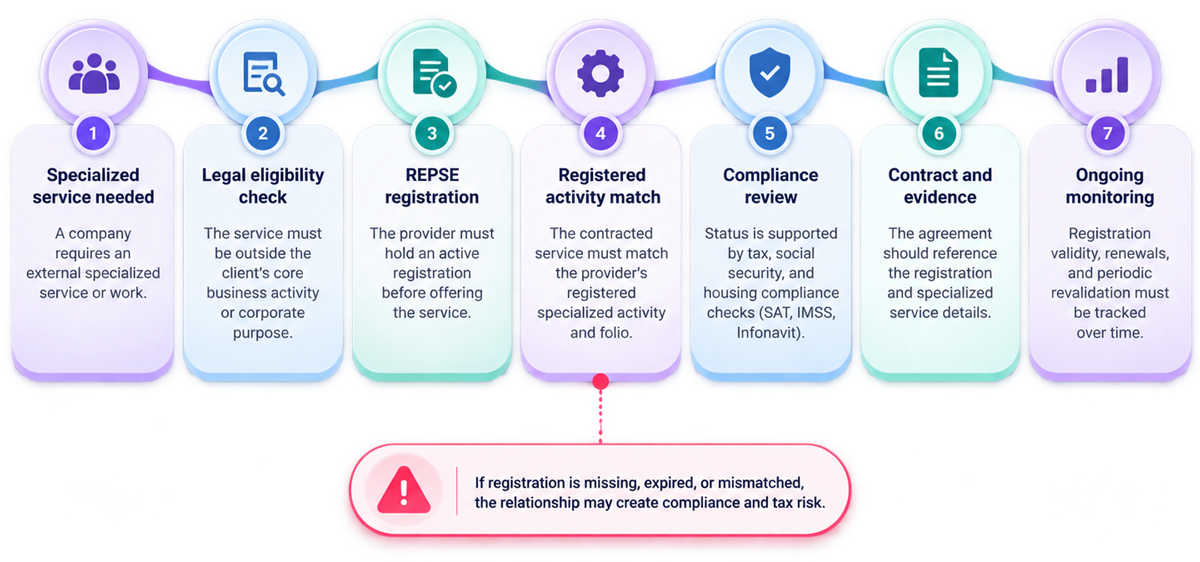
Mexico’s 2021 labor reform restricted personnel outsourcing and established that only specialized services or works outside the client company’s corporate purpose or primary economic activity may be subcontracted. Providers performing these services must be registered with the REPSE, managed by the Ministry of Labor and Social Welfare (STPS).
The regulation also requires providers to demonstrate the specialized nature of their services and remain compliant with SAT, IMSS and Infonavit obligations. Each registered activity receives its own folio, and the REPSE registration is valid for three years, making supplier verification and periodic monitoring an ongoing compliance need rather than a one-time check.
For companies working with multiple specialized suppliers, this creates an operational challenge: they need to track provider status, documentation, registered services and related tax receipts while maintaining reliable evidence of each validation.
Research
Regulatory requirements
We analyzed the Mexican regulatory framework for specialized services to understand when REPSE registration is required, how registered activities are defined, and what conditions must remain valid throughout the commercial relationship.
Supplier compliance lifecycle
Research showed that REPSE is not a one-time verification. Providers must remain compliant with tax and social-security obligations, and their registration can be cancelled if those conditions are no longer met. This made status monitoring and revalidation key product requirements.
Documentation and traceability
We identified the need to connect the supplier, its registered specialized services, contracts, REPSE evidence and related tax documents. This supported the design of supplier records, XML validation, historical queries and downloadable reports.
Findings
| Finding | Product implication |
|---|---|
| REPSE compliance is continuous, not a one-time check. Supplier status can change between Awaiting signature, Validating, Active, or Not found. | The platform needed status tracking, periodic revalidation, and validation history instead of a single verification result. |
| Supplier validation and tax-document validation must be connected. Reviewing XML receipts independently makes it difficult to determine whether a valid tax document belongs to a supplier with the correct REPSE status. | Each receipt needed to be associated with the supplier, REPSE status, validation result, and detected errors. |
| Compliance workflows need to work beyond the portal. Operational teams may need to validate suppliers or large sets of XML files without continuously working inside the web interface. | Email-based commands, notifications, summaries, and downloadable reports became an alternative interaction channel. |
| Supplier participation is part of the compliance process. The client can initiate the registration, but the provider must complete its information, upload REPSE documentation, review extracted data, and sign the declaration of veracity. | The experience required a guided supplier onboarding flow with controlled fields, document extraction, and e.firma/FIEL signing. |
| High-volume validation requires asynchronous and batch-oriented workflows. XML validations may involve individual files or ZIP packages containing multiple receipts, and processing may not finish immediately. | The solution needed batch processing, validation IDs, process states, notifications, retries, and downloadable result reports. |
Architecture and flows
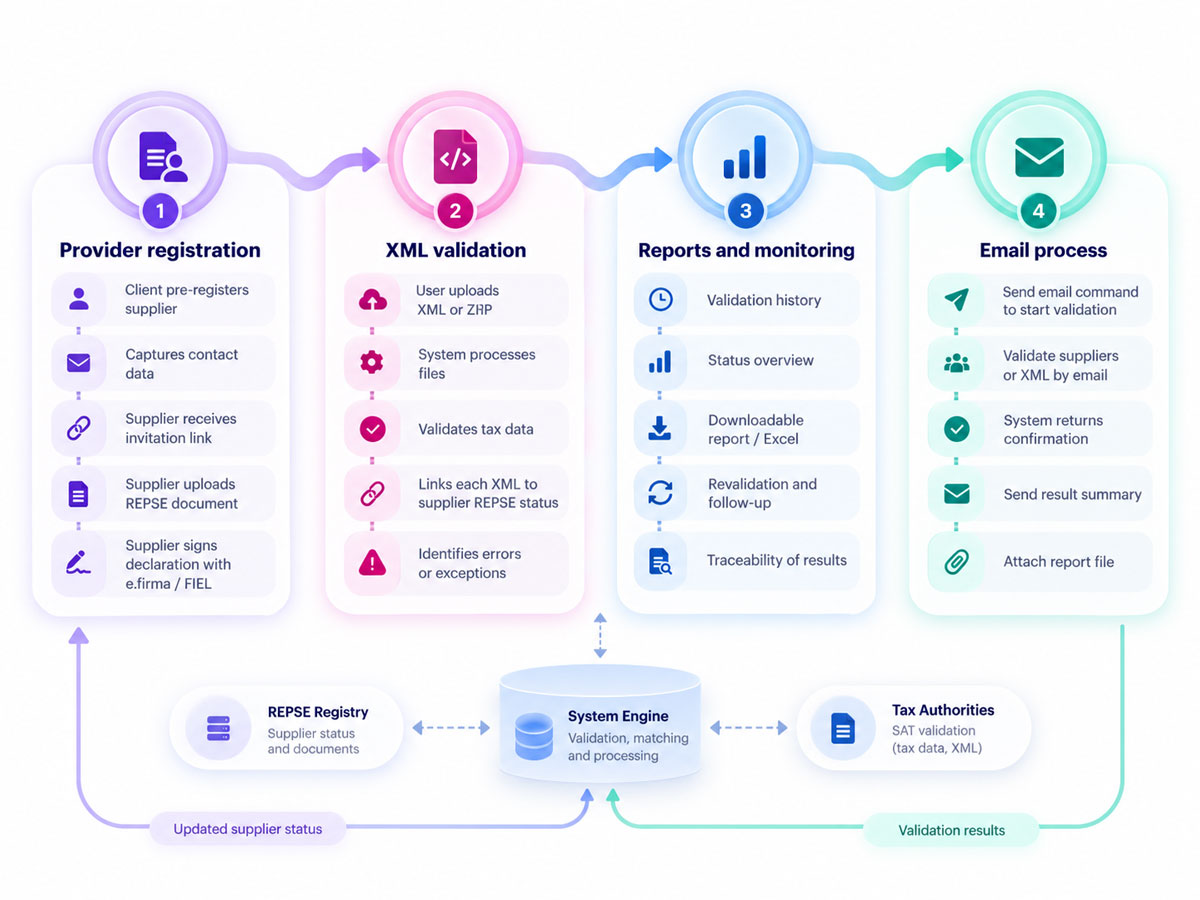
Full flows only on interview
Product decisions
Separate client onboarding from supplier completion
The client can pre-register a supplier with only basic contact information, while the provider later completes the REPSE documentation and verification process through an invitation link. This reduces the amount of information the client must collect manually.
Keep critical REPSE data controlled
After the REPSE document is processed, key information such as registration number, RFC and company name is extracted and presented as non-editable data, reducing the risk of manual inconsistencies.
Add a declaration of veracity with e.firma/FIEL
The provider signs the submitted information using .CER, .KEY and password credentials, creating an explicit confirmation step before the supplier enters the validation process.
Model compliance as a lifecycle, not a binary result
Supplier records use states such as Awaiting signature, Validating, Active and Not found, allowing teams to understand what is happening and trigger follow-up or revalidation when necessary.
Connect XML validation with supplier REPSE status
Tax receipts are not reviewed in isolation. Each XML is associated with its supplier so the user can see both the document validation result and the supplier’s REPSE status in the same workflow.
Support individual and batch processing
Users can upload a single XML or a ZIP containing multiple receipts. Each batch receives a validation ID so processing, errors and results can be tracked independently.
Make email an operational channel
Users can initiate supplier or XML validations through structured email commands and receive confirmations, summaries and Excel reports without entering the portal, extending the product to workflows already used by operational teams.
Design
Primary colors
#13B5EA
#4BC381
#F2BF70
Action colors
#0A7CEE
#FC4349
#24A790
#F3D600
Font colors
#000000
#AAAAAA
#FFFFFF
Grey colors
#555555
#717171
#8E8E8E
#AAAAAA
#AAAAAA
#E3E3E3
Typography
Aa
A B C D E F G H I J K L M N O P Q R S T U V W X Y Z
a b c d e f g h i j k l m n o p q r s t u v w x y z
Noto Sans Bold
Noto Sans
Aa
A B C D E F G H I J K L M N O P Q R S T U V W X Y Z
a b c d e f g h i j k l m n o p q r s t u v w x y z
Wireframe & Mockup
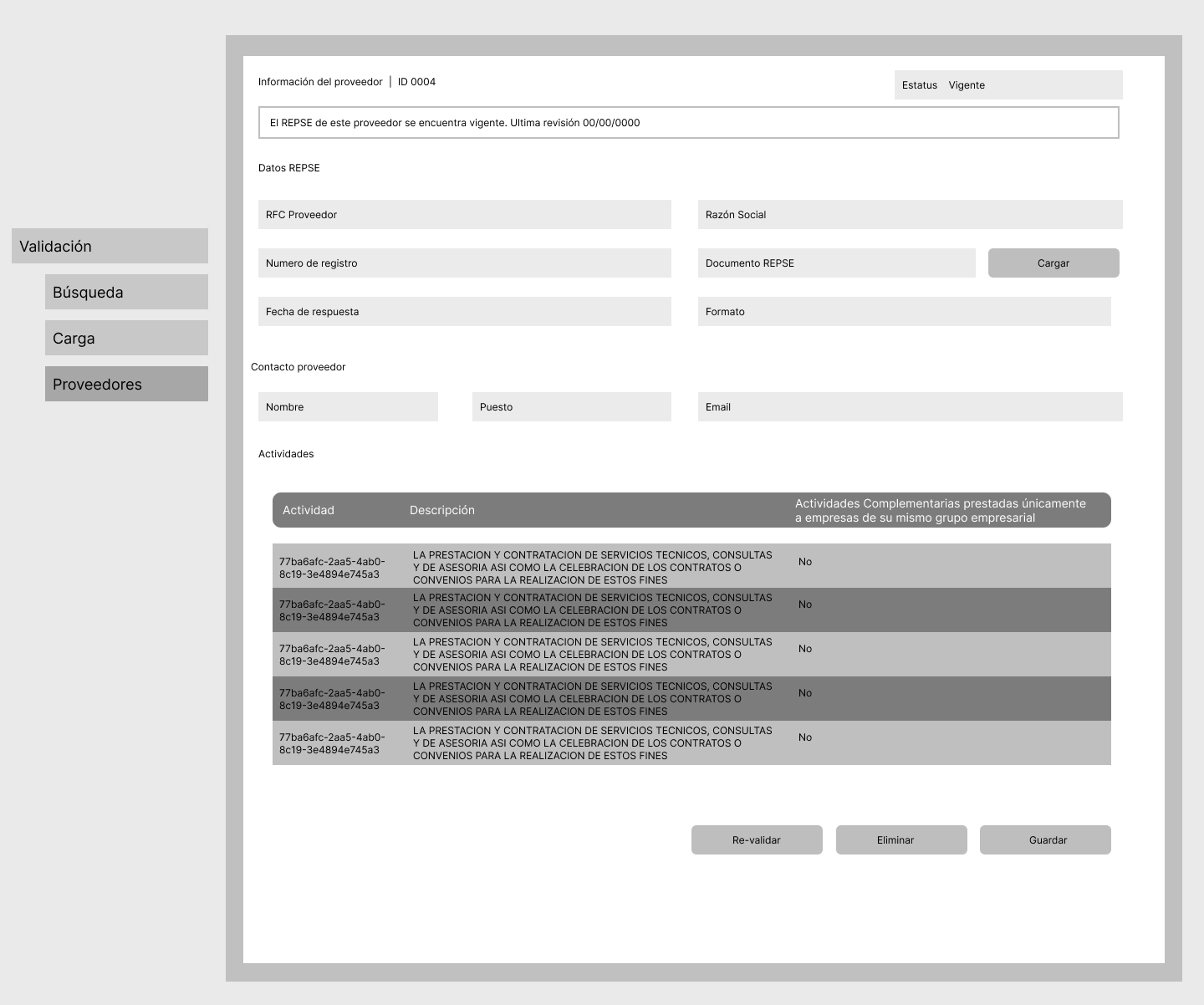
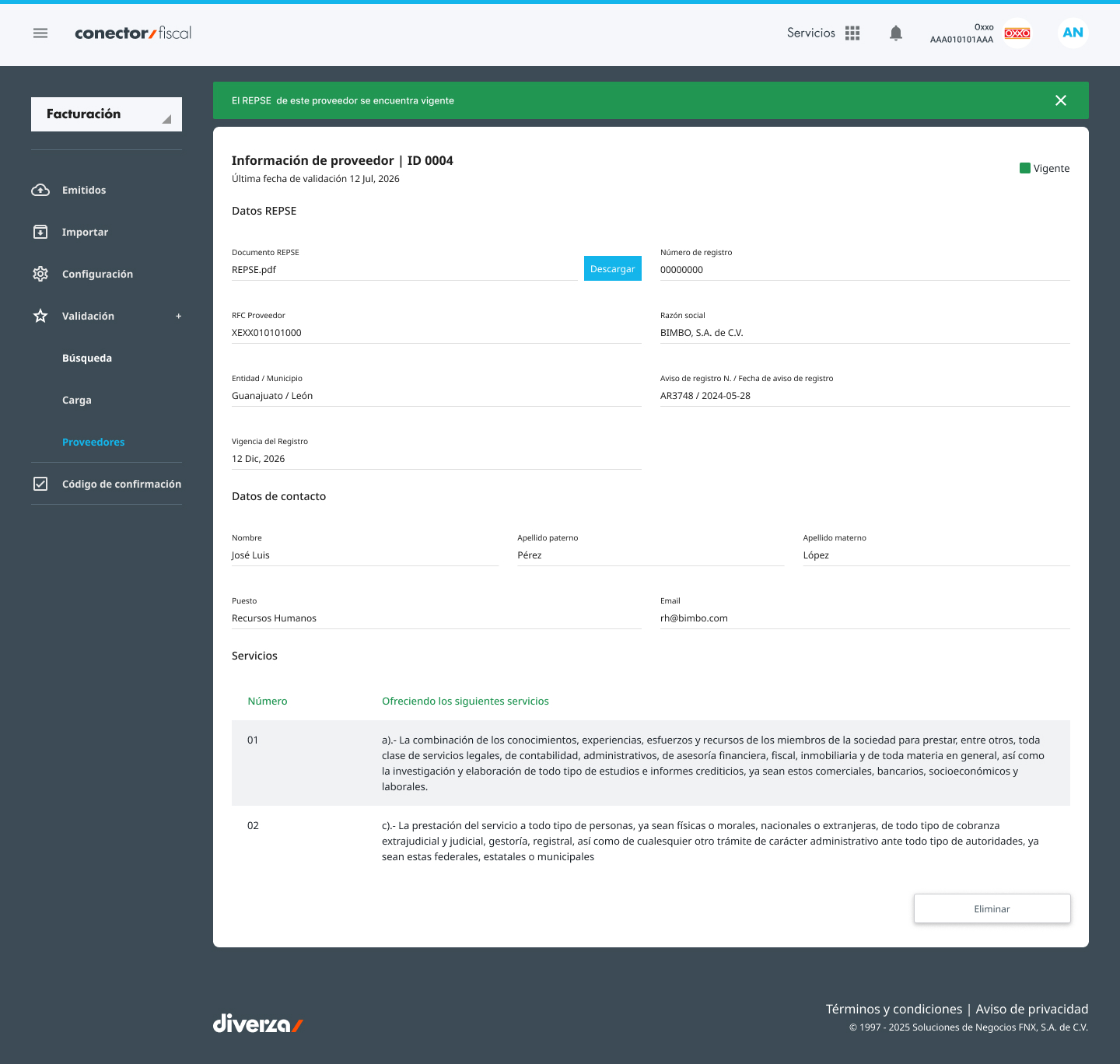
Prototype only on interview
Solution
A centralized supplier compliance experience that connects registration, document and XML validation, status monitoring, and reporting in a single workflow.
Supplier register
Maintaining a valid REPSE registration is essential to this project. Scheduled overnight jobs are used to periodically verify registration status, helping reduce the risk of maintaining commercial relationships with companies involved in potentially irregular invoicing practices.
This procedure was filled by the supplier, & the REPSE register was found succesfully by SAT.
Supplier details corroboration
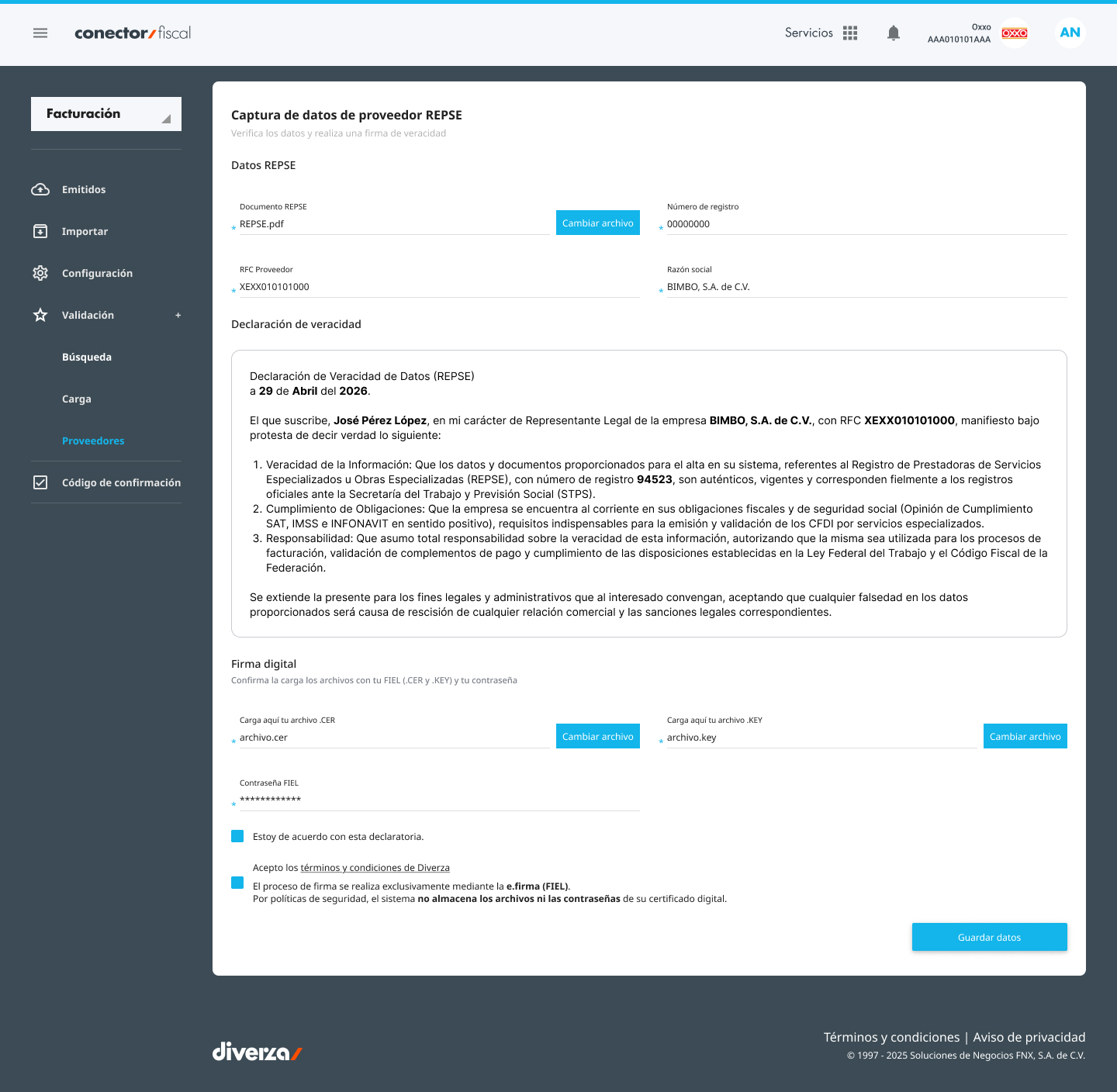
Maintaining a valid REPSE registration is essential to this project. Scheduled overnight jobs are used to periodically verify registration status, helping reduce the risk of maintaining commercial relationships with companies involved in potentially irregular invoicing practices.
Supplier must sign with its own Fiel
Upload of XML
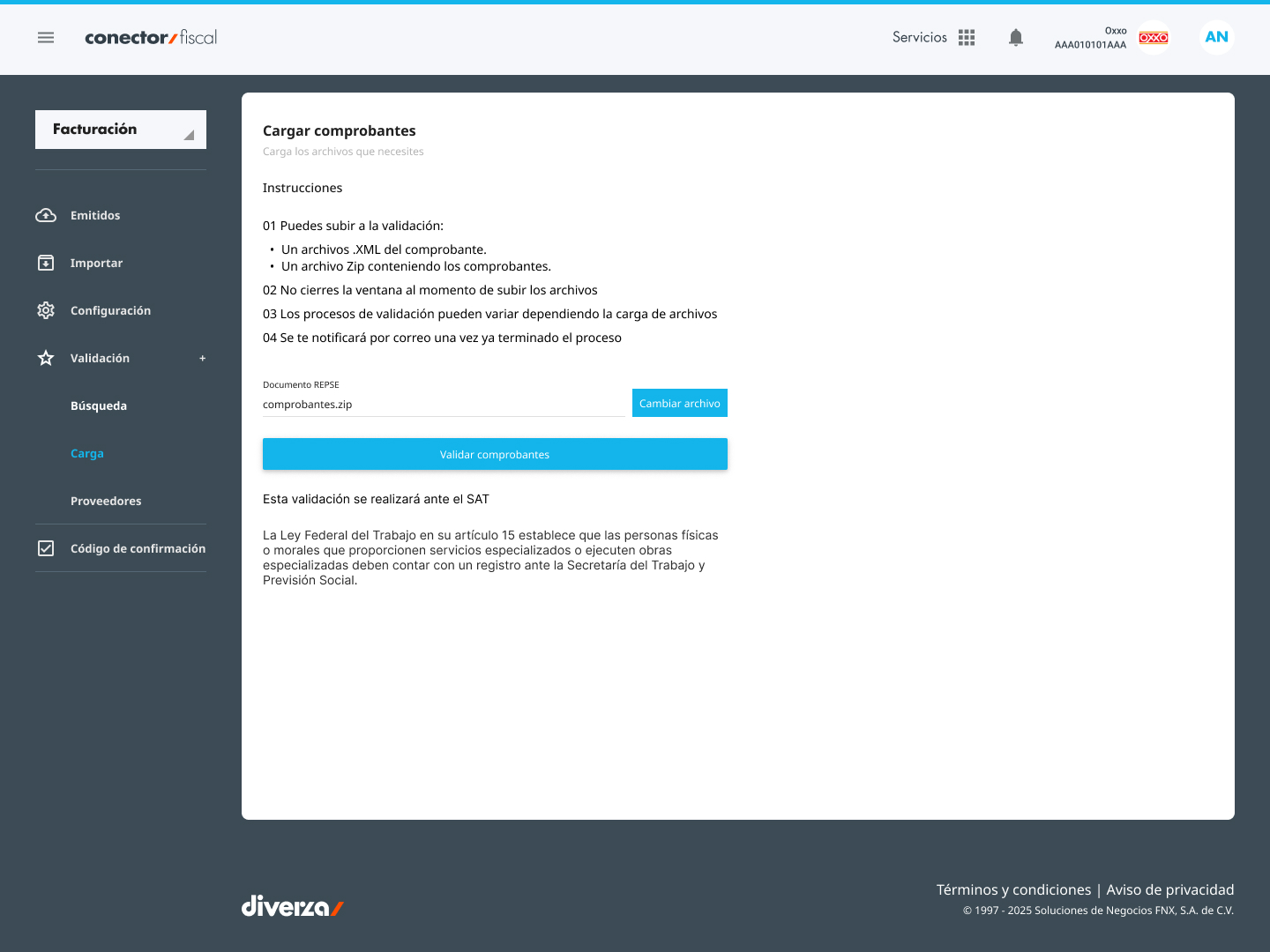
Uploaded XMLs are grouped into a validation batch, creating a single traceable process for status, errors, and results.
Validation detail
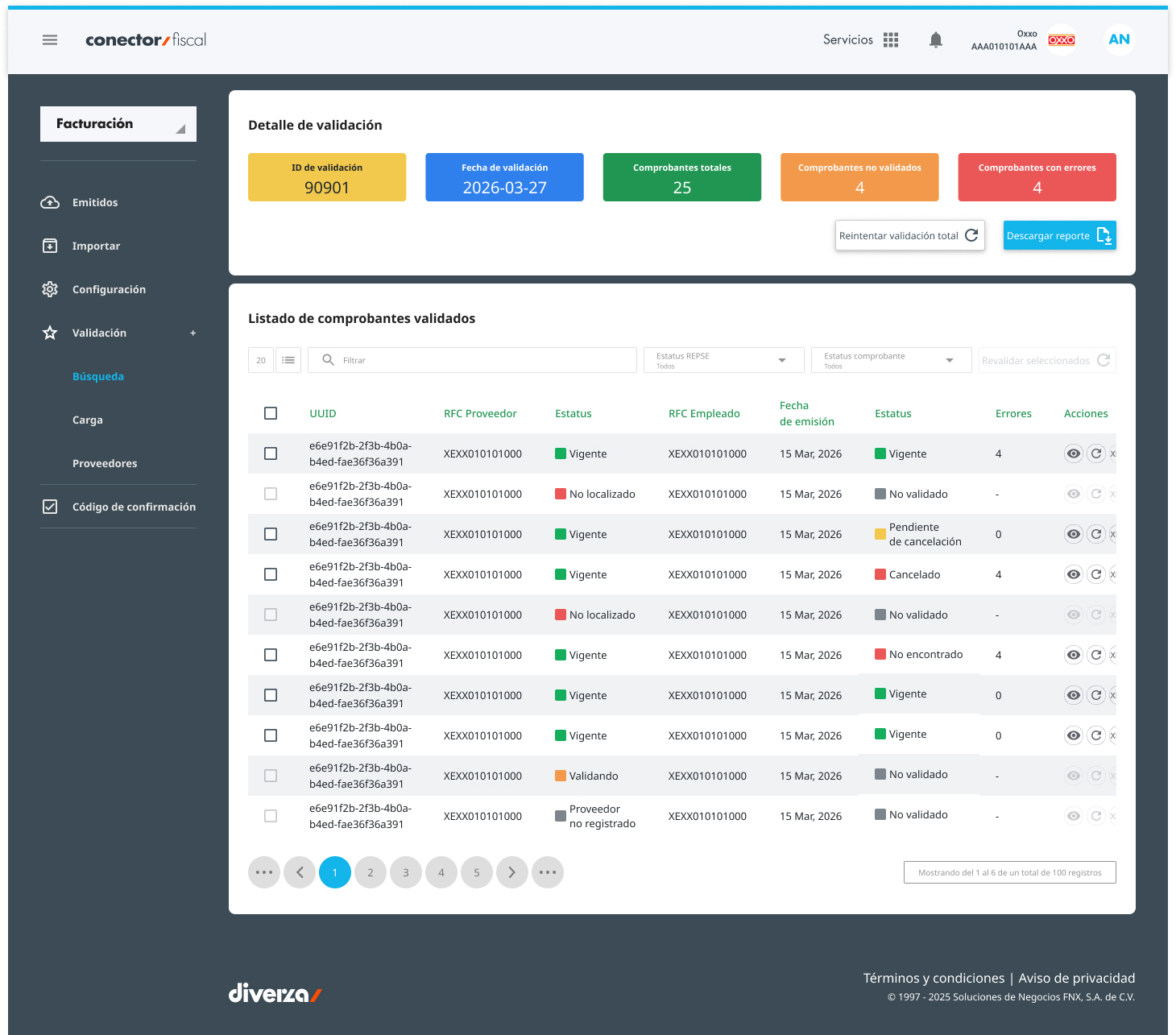
Each validation consolidates the batch results into key metrics, making it easy to identify total XMLs, unvalidated documents, and files with errors at a glance.
Each XML shows both the supplier’s REPSE status and the document validation status, allowing users to quickly identify inconsistencies, errors, or documents that require follow-up.
Email commands
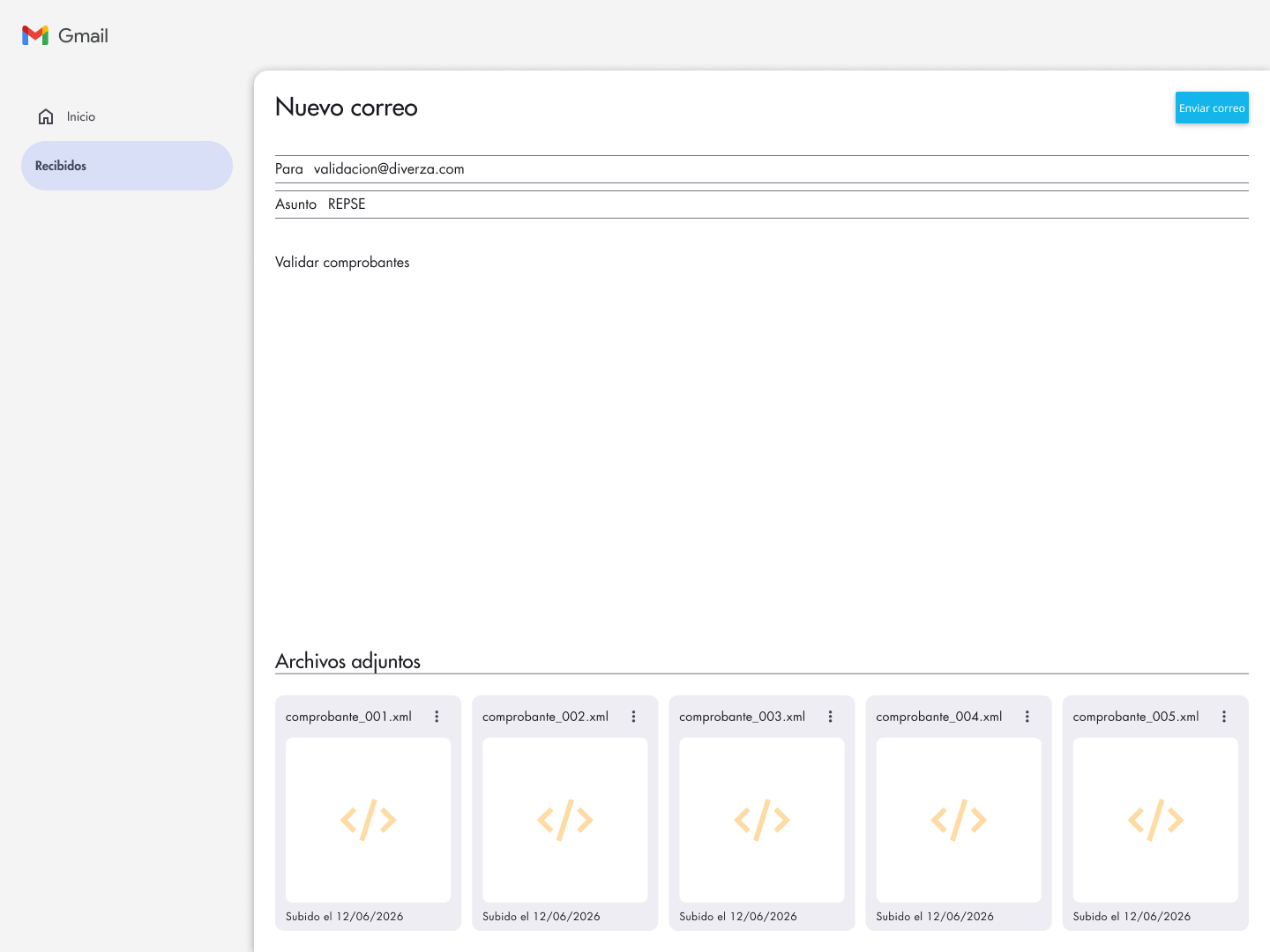
Users can start an XML validation directly from email by sending a predefined command, without accessing the portal.
Multiple XML files can be attached to the same request and processed together as a single validation batch.
Email report
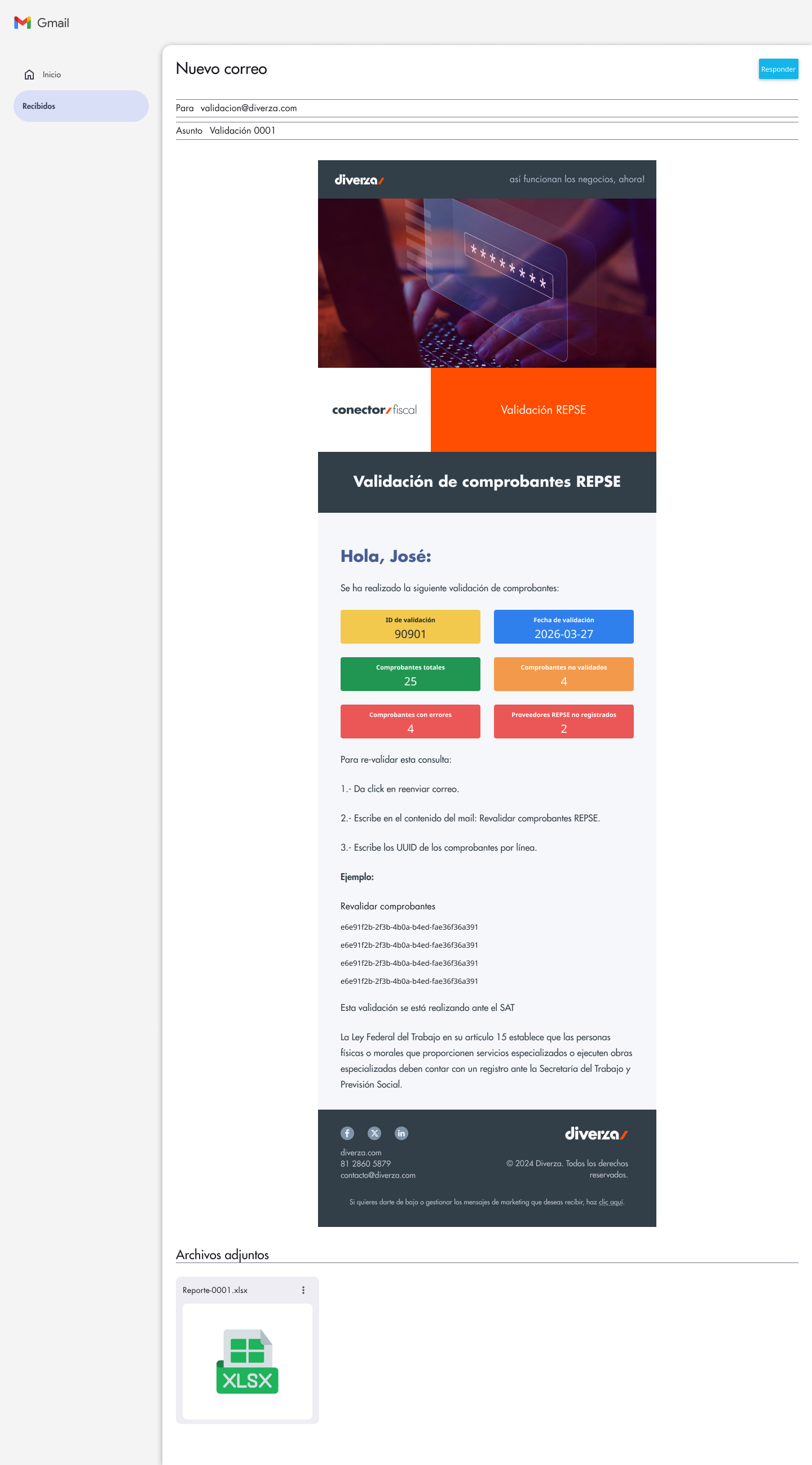
The system returns a clear summary of the validation batch, including total XMLs, unvalidated documents, detected errors, and suppliers without REPSE registration.
Users can revalidate specific XMLs by replying to the email with the predefined command and the UUIDs that need to be processed again.
The email includes an attached report with the full validation results, allowing users to review each processed XML in detail.
Prototype only on interview
Validation
Supplier onboarding · REPSE status · XML validation · e.firma · Revalidation · Batch processing · Traceability · Compliance evidence
End-to-end workflow validation
Acceptance criteria and QA covered the complete supplier journey: pre-registration, required fields, REPSE document upload, extracted data review, e.firma/FIEL signature, confirmation, and transition into the validation process.
Status, error and exception scenarios
Validation included more than successful cases. QA considered suppliers not found, malformed email commands, missing information, attachment restrictions, and controlled error responses to ensure the workflow remained understandable when validation could not be completed.
Reports and asynchronous feedback
Email-based workflows were validated to confirm request reception, processing, status summaries, report generation, and downloadable Excel results, allowing users to continue their work while validations were processed.
Impact
Centralized supplier compliance
The solution brought supplier registration, REPSE status, document review, validation history, and follow-up into a single workflow, improving traceability across the supplier lifecycle.
Reduced manual validation effort
Individual and batch XML processing, structured status tracking, and automated reports reduced the need to review tax documents and supplier status separately.
Extended validation beyond the portal
Email-based commands allowed users to validate suppliers, request status reports, and receive Excel results without depending exclusively on the web interface.
Better exception handling and follow-up
The product supported revalidation, “Not found” cases, controlled errors, and request tracking, making compliance issues easier to identify and act on.
Project learning
From regulation to clear product states
Designing REPSE validation reinforced that compliance products are not only about verifying data, but about managing change, evidence, and responsibility across multiple actors.
Designing for multiple actors and asynchronous processes
The project showed the importance of turning complex regulatory requirements into clear product states, separating the responsibilities of clients and suppliers, and designing asynchronous workflows that remain understandable even when validation is still in progress.
Connecting compliance evidence into one traceable experience
It also highlighted that supplier compliance becomes more useful when registration status, tax-document validation, revalidation, reports, and historical evidence are connected within the same experience rather than treated as isolated checks.